
Which is better, 304 or 316L stainless steel?
Neither grade is universally better. 316L adds 2-3% molybdenum and caps carbon at 0.03%, so its pitting resistance equivalent (PREN) is about 25 against about 19 for 304 - roughly double the resistance to chloride pitting. The decision is made by service environment, not by price per sheet.
When 304 is the right call
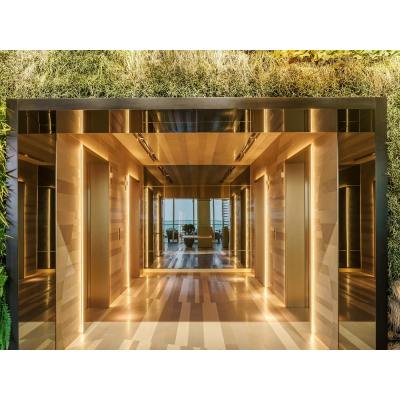
Interior cladding, elevator interiors, trim, handrails and column covers in inland buildings with normal atmospheric exposure. It is the industry default and it is fully adequate there.
When 316L is the right call
Coastal facades, marine air, de-icing salt, industrial or high-pollution zones, and any detail where water can sit in a crevice. Chlorides are the deciding variable.
What the premium buys
A slower corrosion rate and a far lower risk of panel replacement on a finished facade. The grade upgrade is small next to the cost of access equipment and re-cladding.
| Grade | Typical PREN | Molybdenum | Best fit |
|---|---|---|---|
| 304 | about 19 | none | Inland interiors, general atmosphere |
| 316L | about 25 | 2-3% | Coastal, marine, chemical, high pollution |
Both grades are austenitic, non-magnetic in the annealed condition and rated A1 non-combustible. On the same finish they look identical, so grade is verified by mill certificate, not by eye.
Are you looking for a reliable manufacturer?
We can quickly provide customers with market analysis, technical support and customized services.