Mechanical Finishes
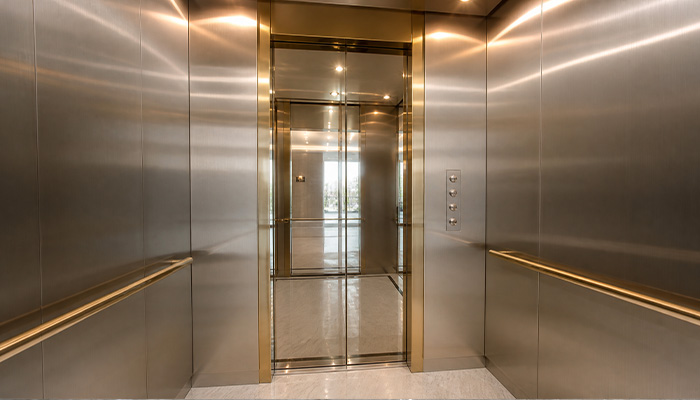
Delivers consistent stainless steel textures such as brushed, mirror, and matte finishes, widely used in architectural facades, elevators, and interior metal applications.

Engineered in One Vertically Integrated Loop. From raw coil to finished panel — grain, colour and protection are produced under one roof and one measured spec.
Your façade or interior is only as durable as its surface. Specify the wrong finish and you get unpredictable color shift, fingerprint staining, or maintenance that never ends. We help you choose, engineer and verify every surface — so the panel you approve is the panel that ships.
Request Finish Sample KitSubmit Your Drawings
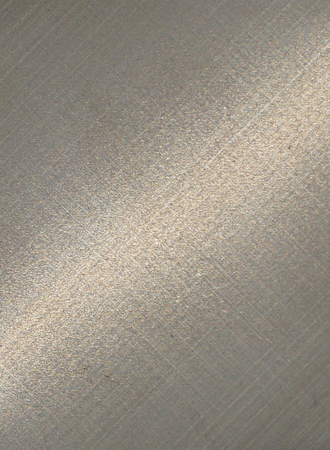
Delivers consistent stainless steel textures such as brushed, mirror, and matte finishes, widely used in architectural facades, elevators, and interior metal applications.
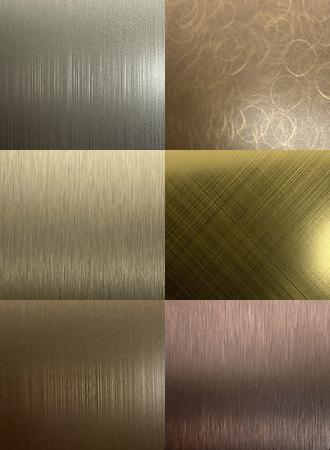
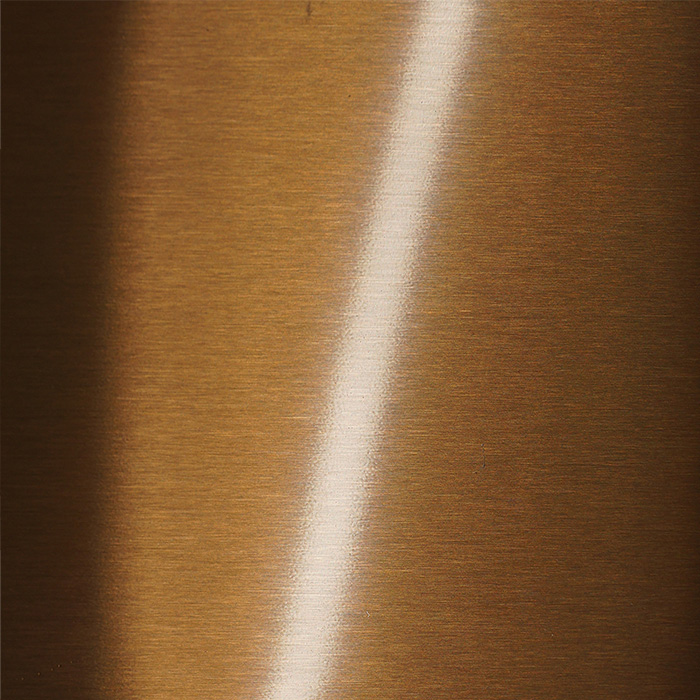
Vacuum ion coating delivers durable metallic colors such as champagne gold, titanium black, and rose gold, ideal for luxury architecture and interior design applications.

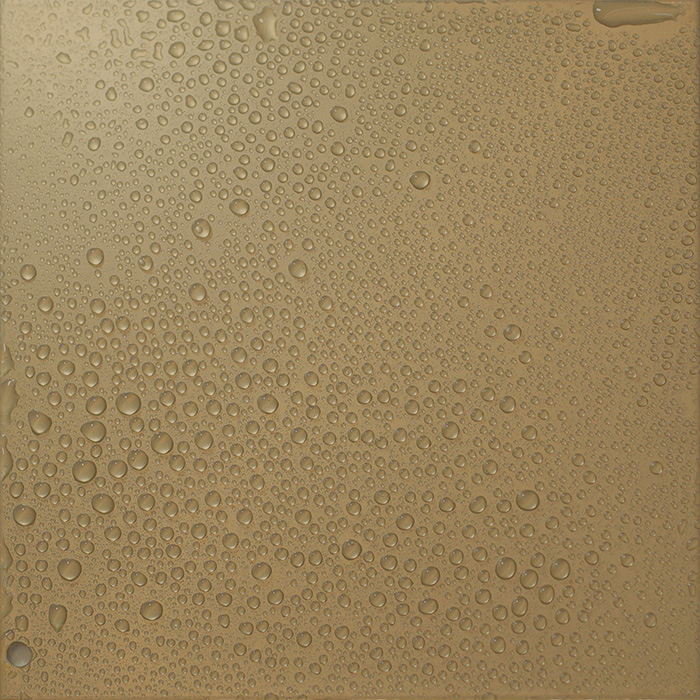
Functional and aesthetic surface system with anti-fingerprint and corrosion resistance, also enabling antique and distressed finishes for diverse architectural applications.

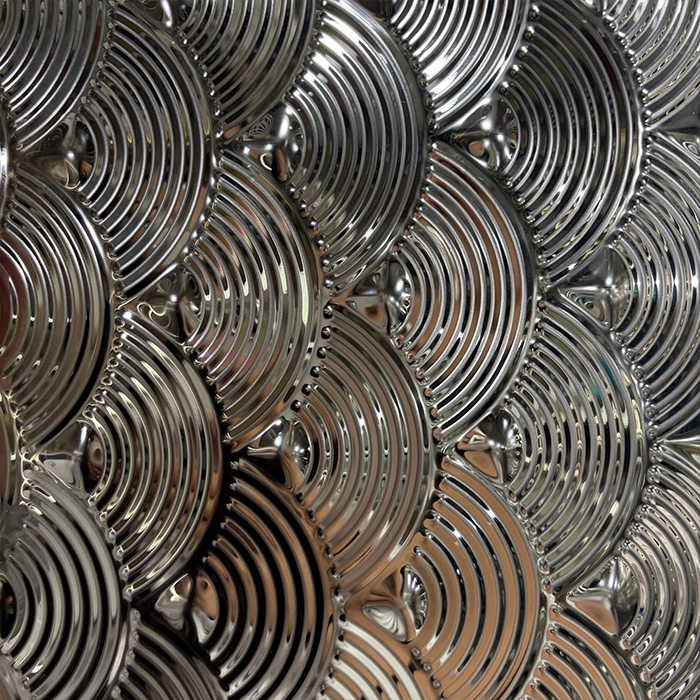
Created through mechanical embossing, forming permanent 3D textures that enhance facade depth and visual expression through light and shadow interaction.

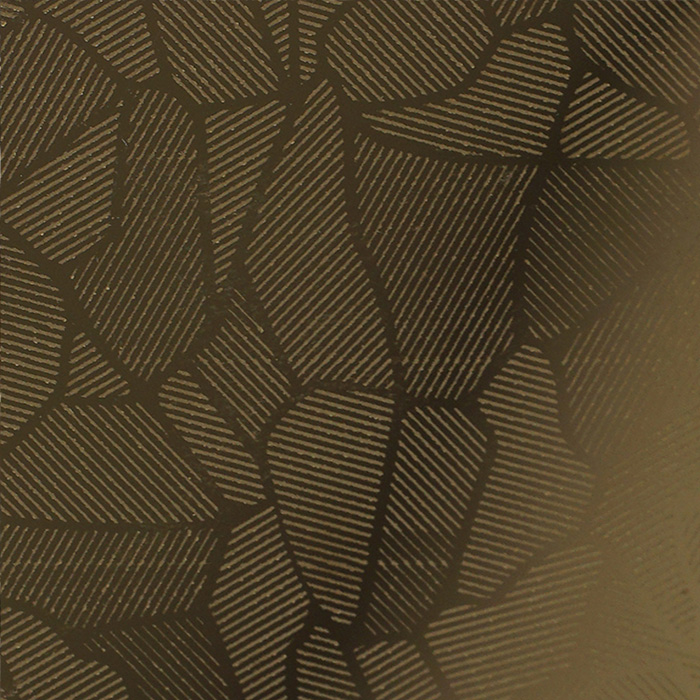
Precision etching enables customized patterns and textures for elevators, feature walls, and architectural decorative detailing.
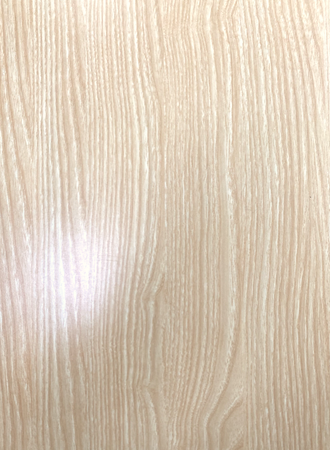
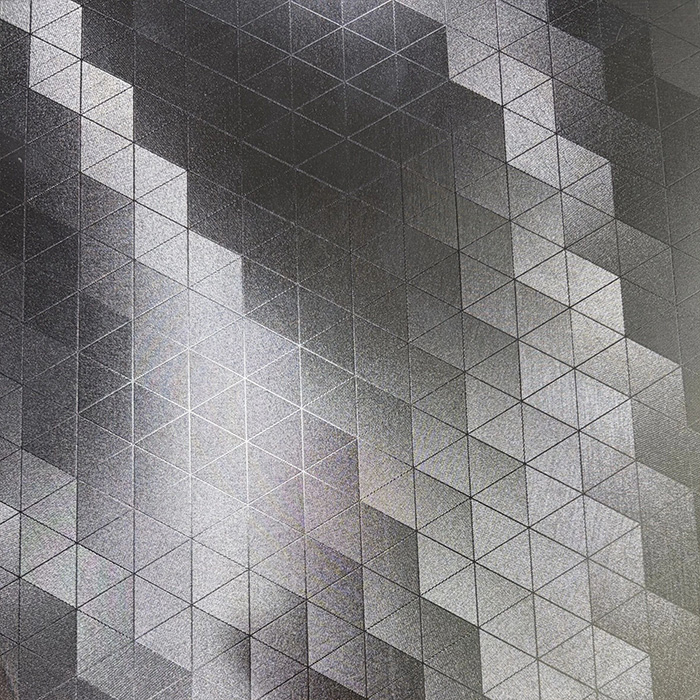
High-definition transfer technology reproduces stone, wood, and graphic textures on stainless steel, combining visual diversity with material durability.
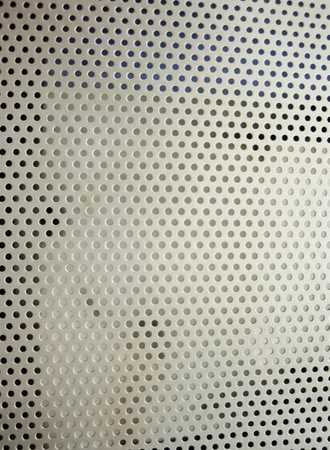
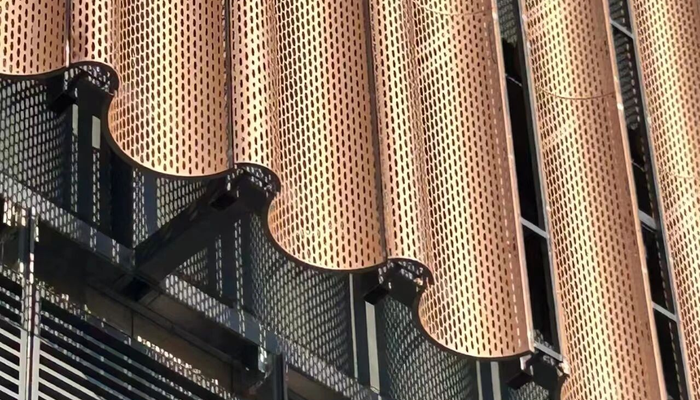
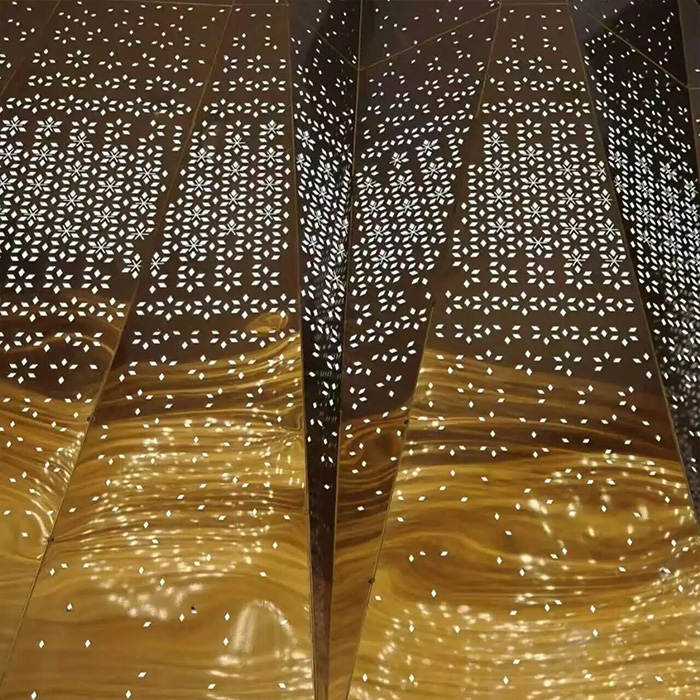
Variable perforation patterns control light, shadow, and transparency, creating expressive and identity-driven architectural facades.
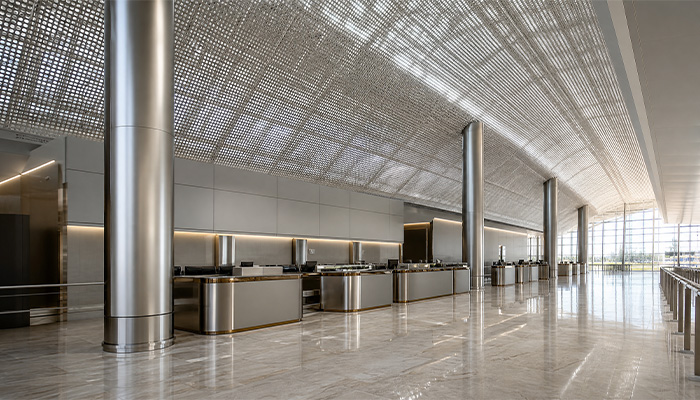
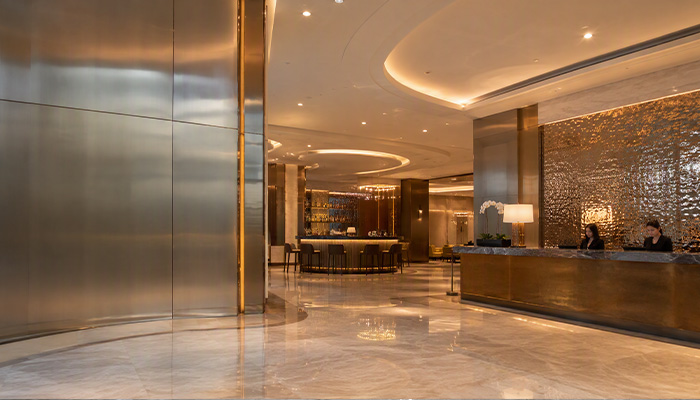
Large brushed and sandblasted columns and walls, perforated ceiling screens; mirror and PVD trim on check-in islands, Nano-AF overlay. Durable, fire-safe, easy to clean — light and wayfinding in one material language.
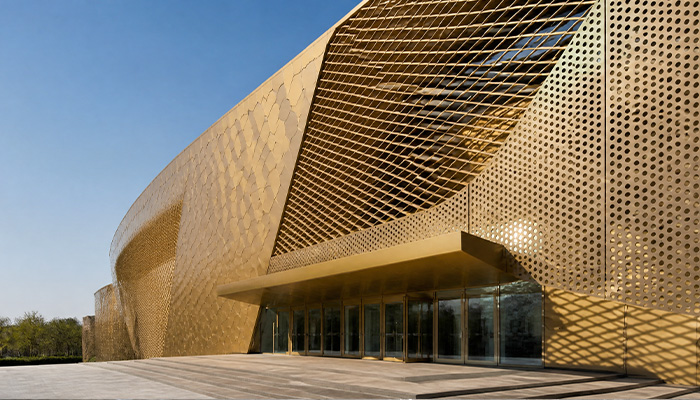
Large perforated and mesh facades for acoustics and light, honeycomb composite panels; mirror and PVD accents at the entrance lobby. A dialogue between acoustics, art and metal.
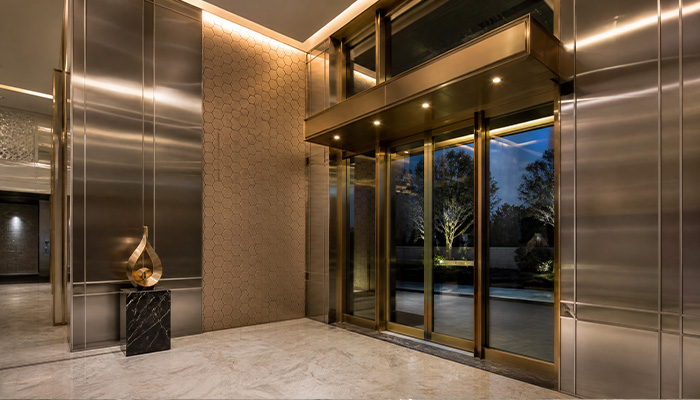
Lobbies, elevator halls and entrance canopies: brushed large areas, champagne-gold PVD canopies, mirror line trims, honeycomb feature walls. The quality entrance of a high-end residence.
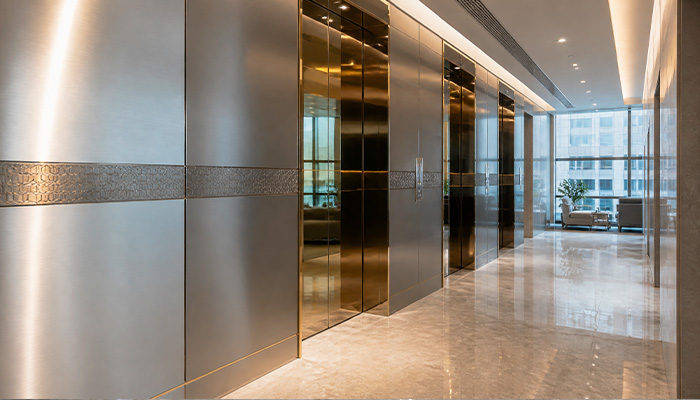
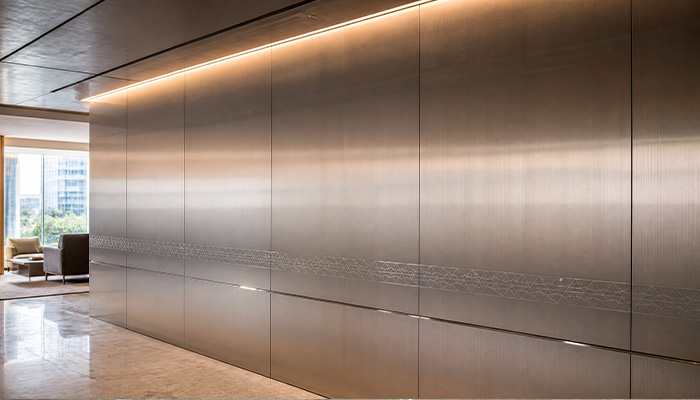
Lobbies, elevator halls and meeting rooms: brushed large areas, etched pattern bands, PVD trim lines, Nano-AF overlay. Order and texture for the business environment.
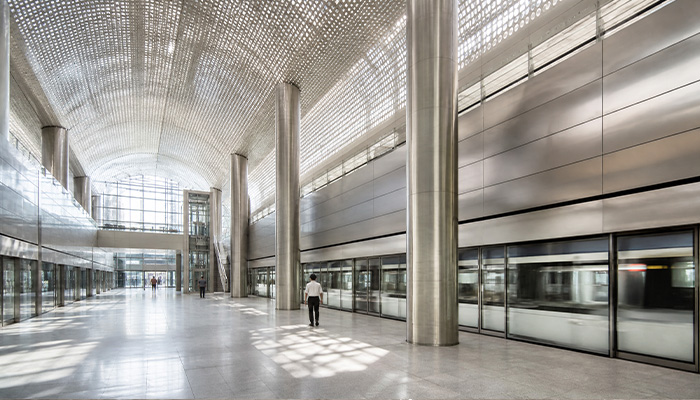
Metro and high-speed rail stations: perforated ceiling screens, sandblasted columns, brushed wall panels. Built for high passenger flow — durable, graffiti-resistant, easy to maintain.
Large perforated screens and brushed panels; PVD champagne-gold trim lines and mirror canopy edges as accents. Perforation controls light and heat; gold lines punctuate; the elevation shifts with the sun.
Large matte brushed and sandblasted areas; etched pattern bands and mirror-8K line accents.
Brushed wall panels, mirror-8K doors, PVD gold handrails and door frames, Nano-AF overlay.
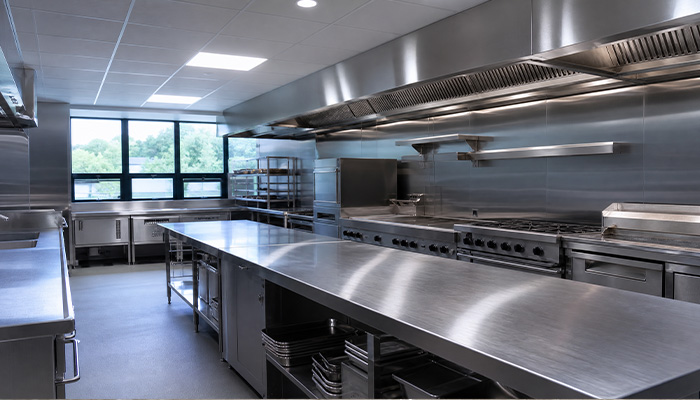
Brushed and sandblasted panels with Nano-AF for hygiene and easy cleaning.
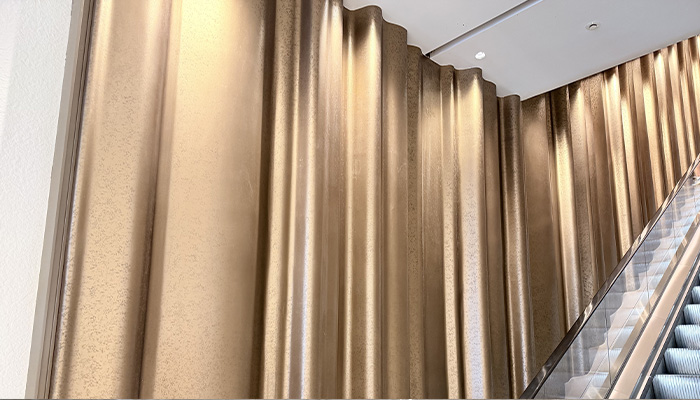
Mixed finishes: brushed large areas, PVD champagne-gold, water-ripple or mirror art walls as small features, antique bar fronts.
Swipe to explore ›
Belt-polished grain (HL / No.4 / Satin / Vibration / Cross), multi-stage mirror polish and zircon bead blast — the family that sets the base surface.
Vacuum ion plating, 0.3–0.5 μm at ≥2000 HV — titanium, rose gold, black titanium and champagne engineered into the metal, not painted on.
Antique patina for one-off character, and the nano anti-fingerprint layer for surfaces people touch every day.
Water ripple, hammered and stamped relief rolled or pressed into the sheet — depth you can see and feel.
Chemical or laser etching, 0.1–0.3 mm deep — brand motifs, wood and stone effects.
Transferred patterns and printed texture — visual effects reinterpreted in metal, including short bespoke runs.
CNC punching and laser cutting, open area tuned to sun, wind and sightlines.
Finishes can be combined — Nano-AF over PVD, etching over a brushed base, perforation on a colored panel. Every combination is produced in the same plant.
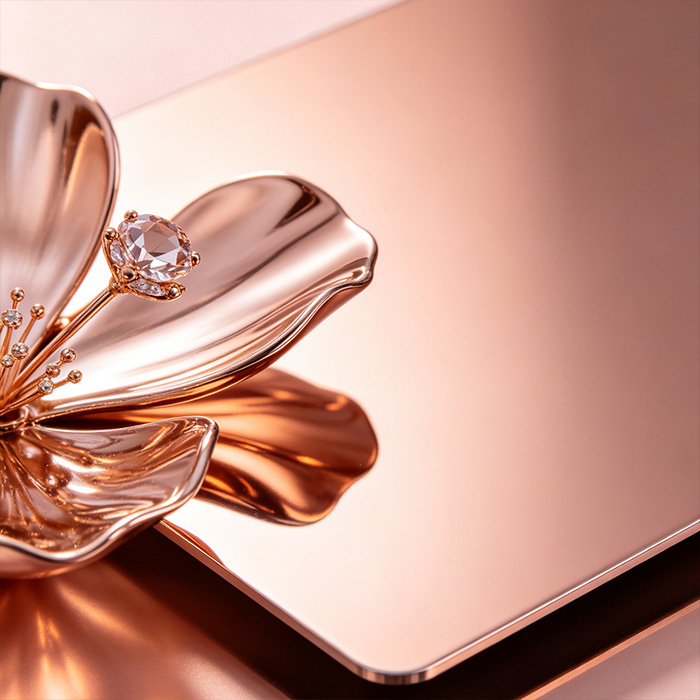
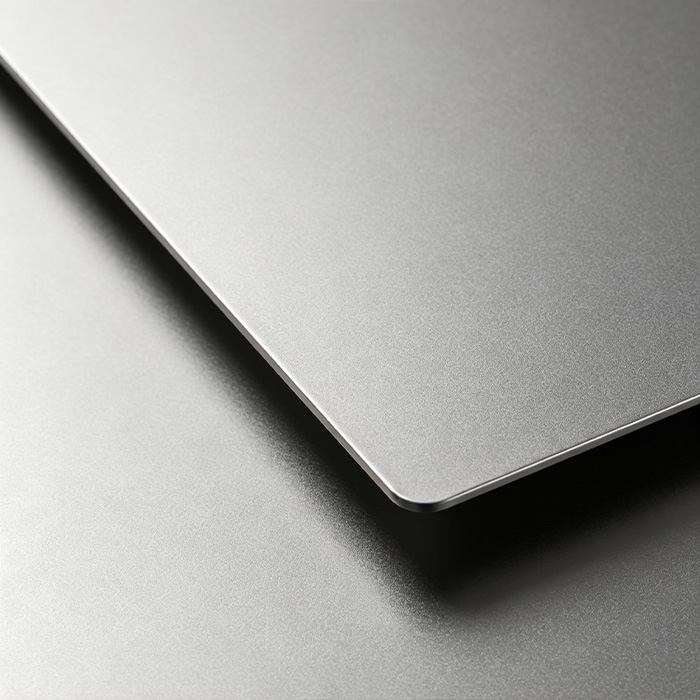
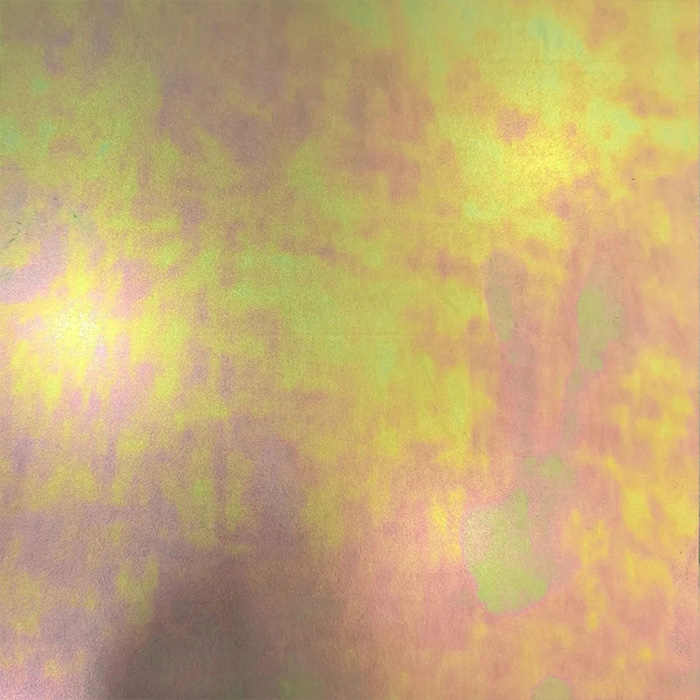
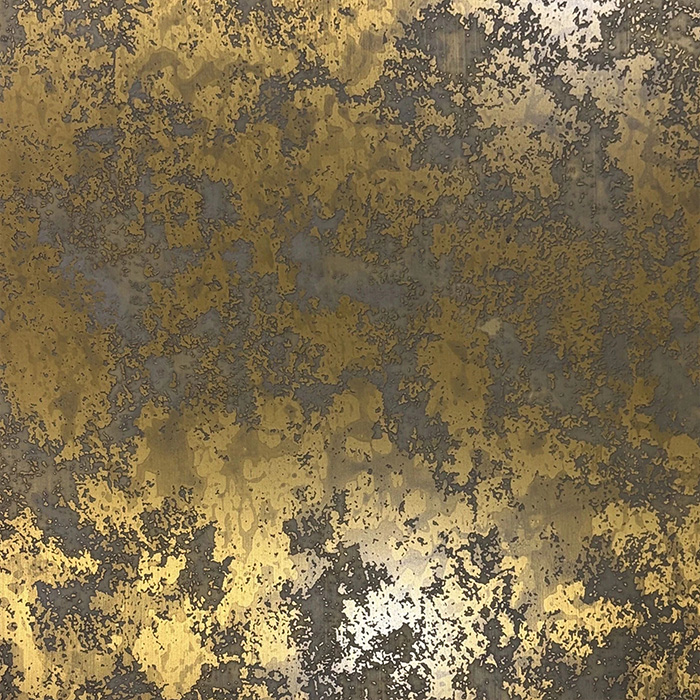
Swipe to explore ›
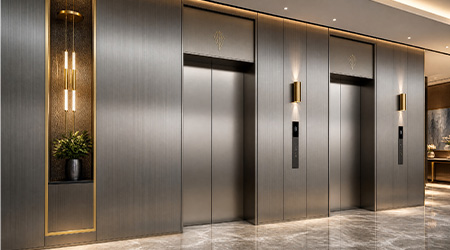
The indoor standard. Excellent corrosion resistance for most interiors; cost-effective baseline.
Ideal For:elevator cabs, lobbies, kitchens, standard facades.
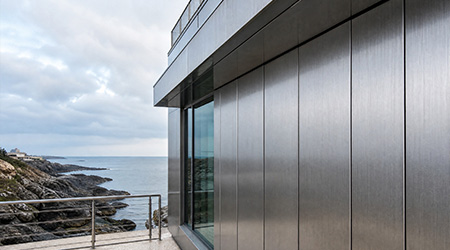
Marine-grade. Superior resistance to chlorides and salt — the choice for coastal, medical, chemical and marine environments.
Ideal For:hospital corridors, coastal cladding, marine interiors, wet areas.
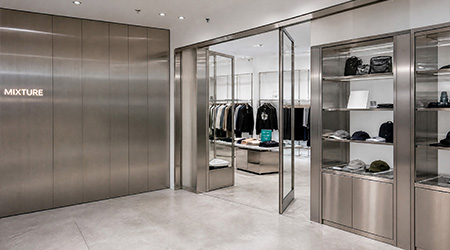
Budget-friendly. Adequate for dry, low-corrosion decorative interiors.
Ideal For:decorative panels, low-humidity interiors, cost-sensitive projects.
| PARAMETER | Specifications | |
|---|---|---|
 | Thickness | 0.3-3.0 mm |
| Width | 10-1500 mm | |
| Length | 300–6000 mm | |
| Flatness | ≤ 3 mm standard; ≤ 10 mm for embossed, perforated and laser-cut panels | |
| Tolerance | Thickness:±0.01mm;Width/Length: 0 /+0.2 mm | |
| Fire Rating | A1 | |
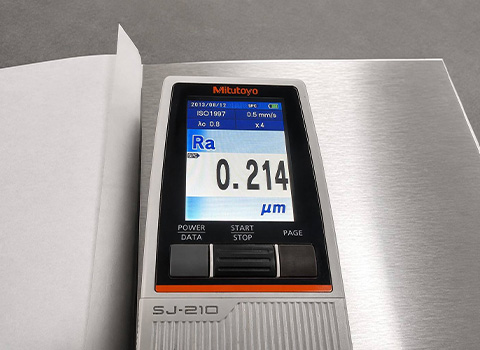
| Surface Roughness (Ra) | Ra ≤ 0.3 μm — mechanical & PVD. N/M for embossed, etched, printed and laser-cut finishes. | |
| Colour Consistency (ΔE) | below 1.0 — mechanical & Nano-AF. PVD & antique: 1.0-1.5 batch to batch. N/M for embossed, etched, printed and laser-cut finishes. | |
| Protection | PVC protective film + Waterproof Paper + Wooden Package | |
| Salt Spray Resistance | Available on request neutral salt spray, ASTM B117 / ISO 9227 | |
| UV & Weathering | Available on request accelerated UV ageing, ASTM G154 / ISO 11507 | |
| Abrasion Resistance | Available on request Taber abraser, ASTM D4060 | |
| Coating Adhesion | Available on request cross-cut, ISO 2409 / ASTM D3359 |
Finish Selection Matrix — every finish, side by side
| FINISH | APPEARANCE | FLATNESS | WEATHER RESISTANCE | EXTRA LEAD TIME | MOQ |
|---|---|---|---|---|---|
| MechanicalBrush · No.4 · Vibration · Mirror 8K · Sandblasted | Satin grain, full reflect or uniform matte | ≤ 3 mm | Interior & sheltered exterior; mirror interior only | Baseline to +2–3 days | 50 sheets |
| PVD Color CoatingChampagne · titanium black · rose gold | Colour engineered into the surface, 0.3–0.5 μm | ≤ 3 mm | Interior & exterior | +3–5 days | 50 sheets |
| Specialized FinishesAntique & Patina · Nano anti-fingerprint | Aged character or a clear anti-fingerprint topcoat | ≤ 3 mm | Interior feature; Nano-AF interior & exterior | +2 days stacked / +5–7 days | 50 sheets |
| EmbossedWater ripple · hammered · stamped | 3D relief, light-breaking or die-pressed pattern | ≤ 10 mm | Interior & sheltered exterior | +5–7 days | 50 sheets |
| Etched | Recessed artwork, 0.1–0.3 mm | ≤ 3 mm | Interior & sheltered exterior | +5–7 days | 50 sheets |
| Printed / Transferred | Stone, wood, graphic imaging | ≤ 3 mm | Interior only | +5–7 days | 50 sheets |
| Perforated & Laser-Cut | Open area 5–60%, cut-through screens | ≤ 10 mm | Exterior & interior | +3–5 days | 50 sheets |
Available substrate across every finish: SUS 304 / 316L / 201 (201 for interior and dry areas). Ra and ΔE are controlled on mechanical and PVD finishes only — N/M elsewhere, and never stated as a controlled value. Standard lead time is 20 days from drawing approval; figures above are added to it.
50 sheets
20 days standard
express +3–7 by finish
A4 in 3 days
freight at cost
within 24h

PVD integrates with substrate — brand color stays uniform and long-lasting.

Ra determines reflection — light environment is predictable and stable.

Nano-AF + correct grade selection = lowest maintenance cost over the panel's life.
Indoor, coastal or outdoor exposure decides the grade: 304 for dry interiors, 316L for coastal and chemical environments.
High-traffic spaces benefit from Nano-AF and matte textures — wipe-clean, no polishing schedules.
Mirror 8K to hairline, sandblasted to PVD coated — brand colours matched to a measured ΔE target.
0.3–3.0 mm; honeycomb composite for large spans, Tolerance ±0.01 mm.
MOQ 50 pcs, 20-day lead time, A4 samples in 3 days
Perforated large areas for shade, PVD coated for accent, mirror for detail.

Detail & feasibility review

Mill-sourced quality steel

Precision width cutting

Flatness & stress control

Finish testing & matching

Coating & performance

Punching, Bending, Laser

Inspection & verification

Secure & protected

Global Delivery & Site Technical Support
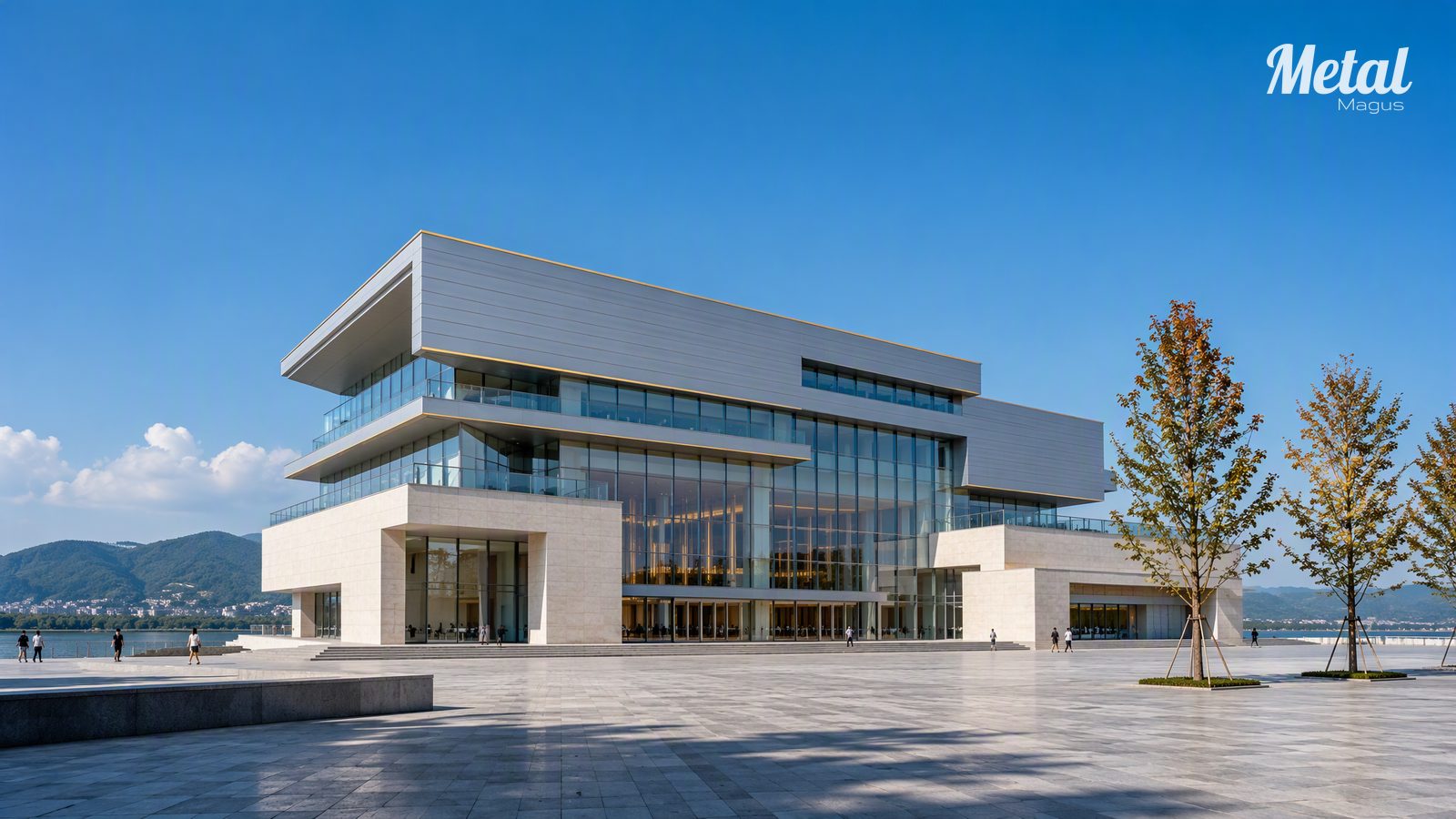
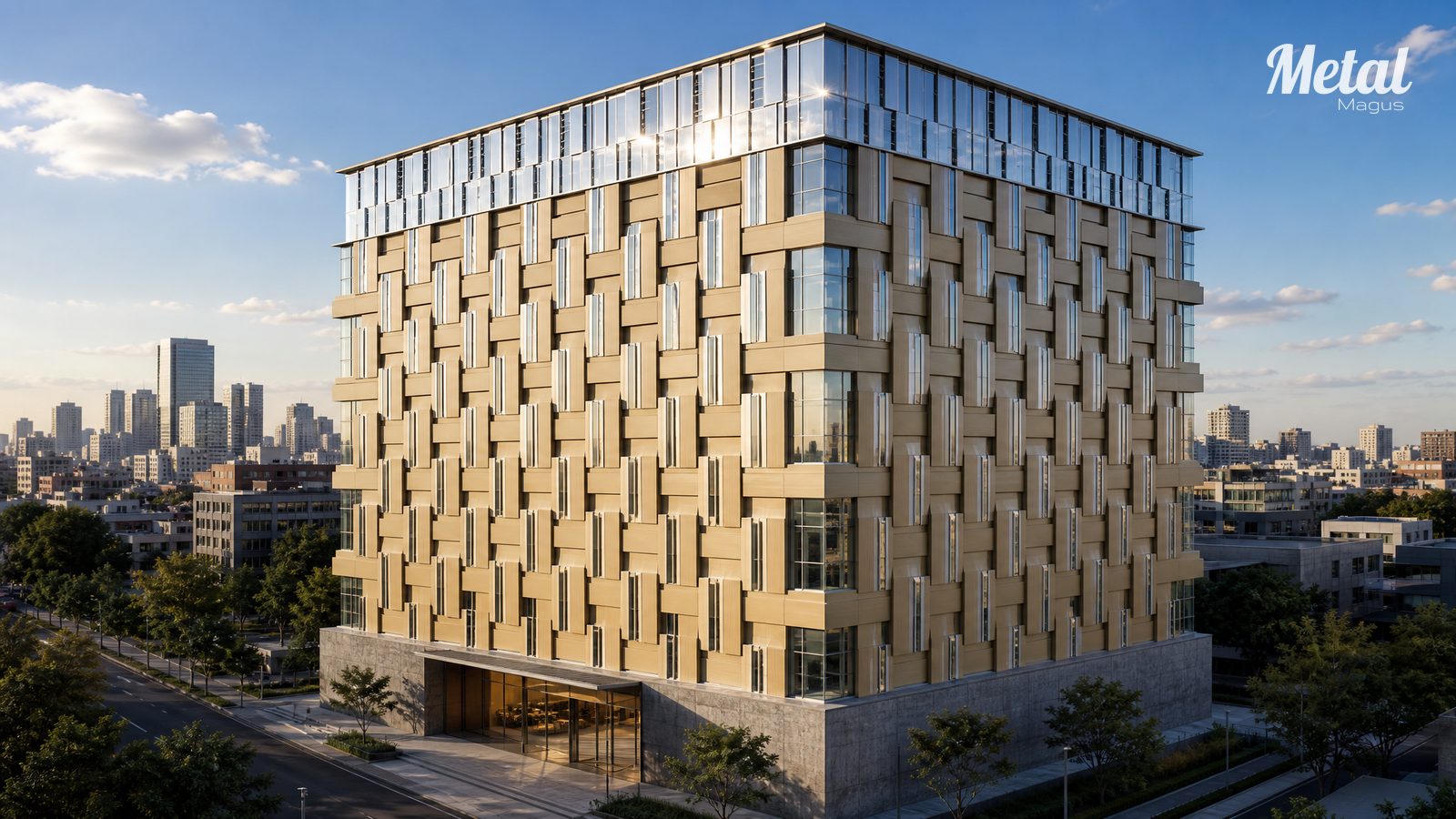
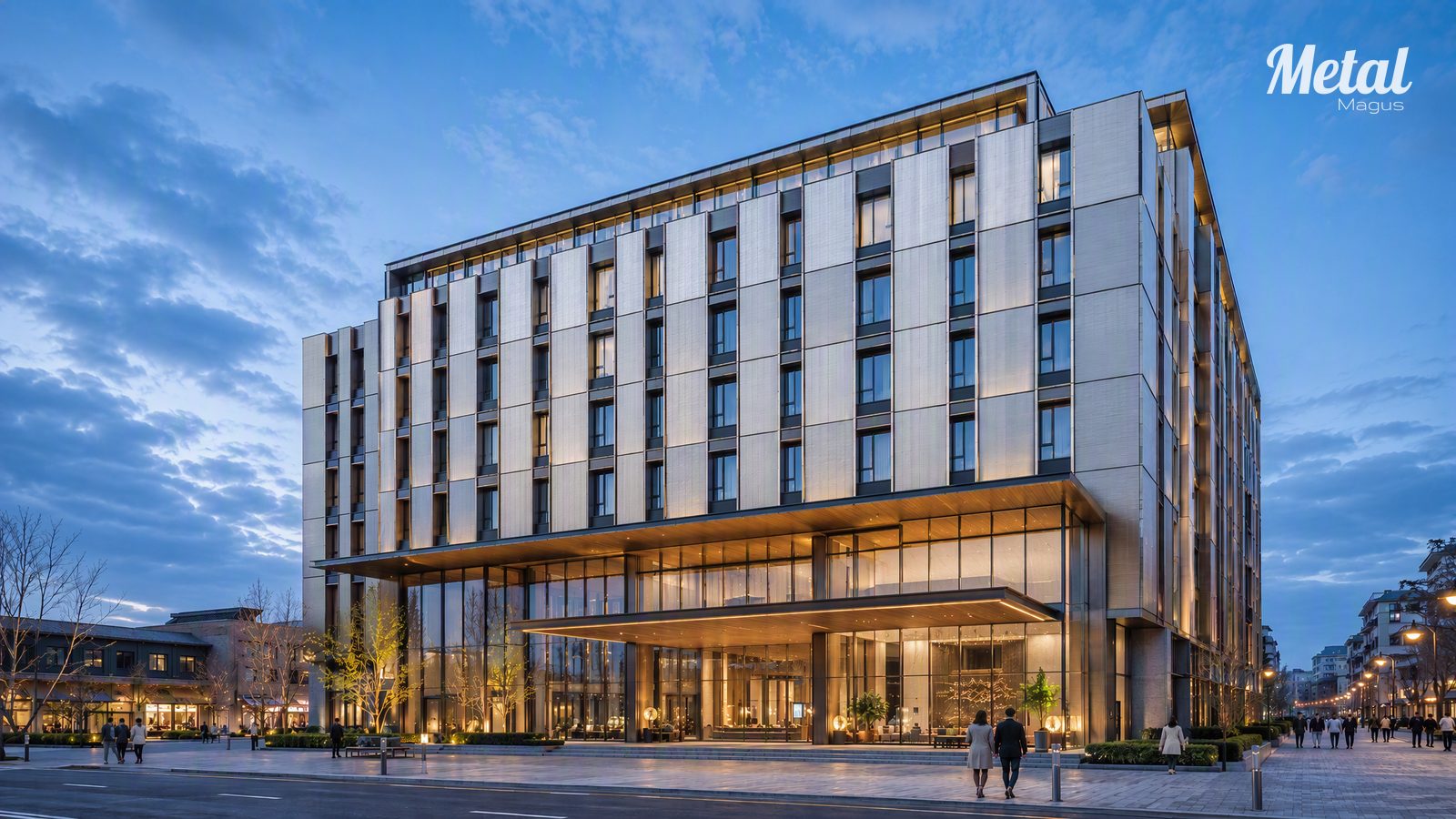
Three built projects, three specifications: brushed 316L stainless steel at a civic edge, a PVD coated module wall on one colour standard, and a retro brushed sheet at full elevation scale.
Brushed 316L at 1.5 mm carries the middle layer of a four-material unitized wall — limestone, UHPC and low-iron glass above and below it in lightness. The grain keeps reflection low enough that the metal reads as one surface rather than a grid, and riverfront chloride is why this 316L brushed stainless steel, not 304, takes the visible faces.
Warm sand-gold PVD coated 304 stainless steel, on a 600 × 2,400 mm module alternating flat and 80 mm convex trays. Cross-hatch brushed at 45° instead of vertical, breaking the highlight into a finer texture. Colour consistency is held to ΔE 1.0–1.5 batch to batch, and the same standard runs inside to the lobby and lift lobbies.
A retro brushed stainless steel sheet at large format, vertical grain set against smoked blue-grey glazing recessed behind it. The surface filters street and sky rather than reflecting them, which is why a brushed finish can carry a whole elevation at this scale while high-gloss stays an accent.