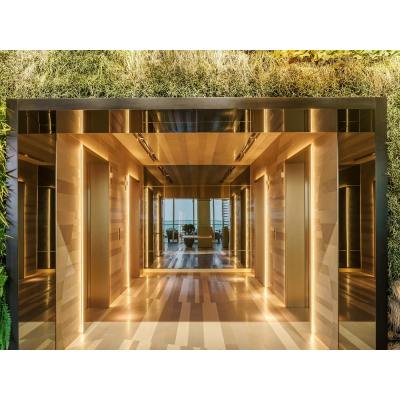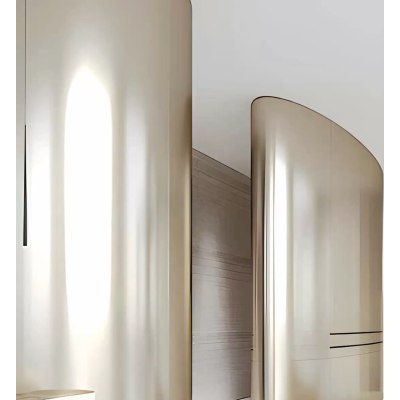
Water Ripple Stainless Steel: Choosing Ripple Scale for a Ceiling
Water ripple is sold as one finish but it is produced in at least three scales, and the scale changes the result more than the colour does. The same texture that looks controlled on a 3 metre lobby wall can look agitated across a 20 metre ceiling, simply because the relief is being read from a different distance.
What ripple scale actually controls
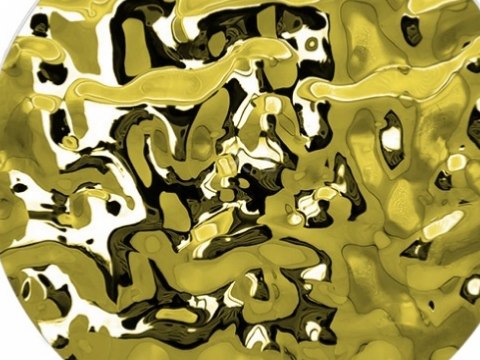
The relief is a three-dimensional pattern formed into the sheet. Its scale sets two things at once: how densely the highlights are distributed, and how large each reflected fragment is. Fine ripple breaks the reflection into many small pieces, which reads as a dense, almost fabric-like texture. Large ripple breaks it into fewer, broader forms, which reads as movement across the surface.
From close up, fine ripple is legible and large ripple looks almost flat. From far away the relationship reverses: fine ripple averages out into a soft sheen, while large ripple is still clearly a form.
Matching scale to viewing distance
The practical rule is to choose the scale by the distance at which the surface will usually be seen. Detail surfaces, wall features and smaller interiors are viewed from two to three metres, which suits fine ripple. Lobbies and general ceiling areas are seen from five to ten metres, where medium ripple holds both texture and reflection. Large ceilings, entrances and landmark interiors are seen from further still, where only large ripple keeps any visible movement.
Ceilings are a special case
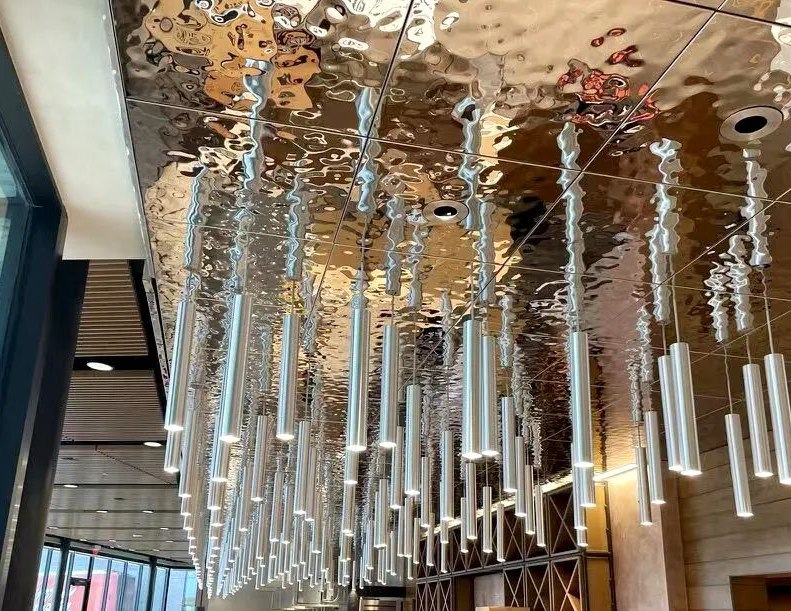
A ceiling is viewed at an angle, from below, and usually under artificial light. That combination exaggerates relief: downlights create hard highlights on the crests and deep shadow in the valleys, so a scale that looks subtle on a vertical wall can read as busy overhead.
It is also the surface where mistakes are hardest to correct, because the ceiling is installed last and seen by everyone. On extensive ceilings medium or large ripple is normally the safer specification, with fine ripple reserved for smaller areas or feature zones.
Light changes the answer
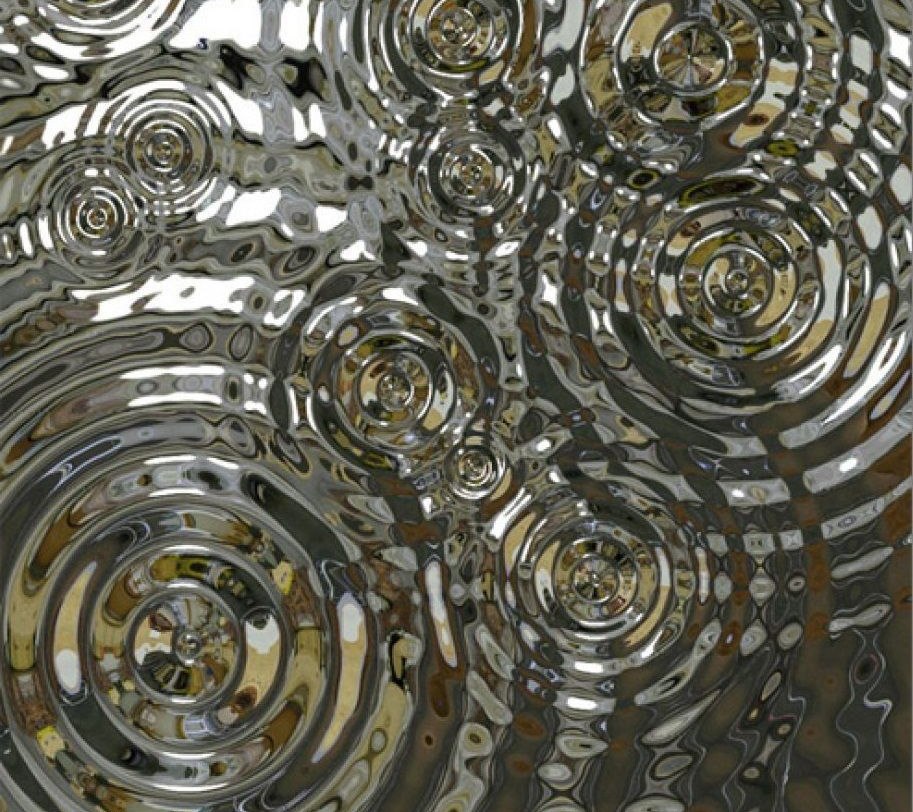
The same panel reads two ways in the same room. Soft, even light produces quiet tonal transitions and the surface looks calm; focused light increases contrast and the movement becomes obvious. Since most interiors have both conditions across a day, the choice is judged across those conditions rather than from one photograph.
Sample before specifying
This is the one finish where a photograph is genuinely misleading, because the relief cannot be judged from a flat image. An A4 sample is available within 3 days; hold it at the intended viewing distance and under the intended light before fixing the scale.
The full range is on the water ripple stainless steel page, or request a sample for your ceiling height.