Stainless Steel Elevator Interiors: Finishes That Survive Close Range
Most architectural surfaces are seen from a distance. An elevator cabin is not. For thirty seconds at a time, people stand within arm's reach of the wall, look at it, and often touch it. That changes which properties matter, and it is why finishes that work beautifully in a lobby can disappoint inside the car.
Reflectivity changes the size of the space
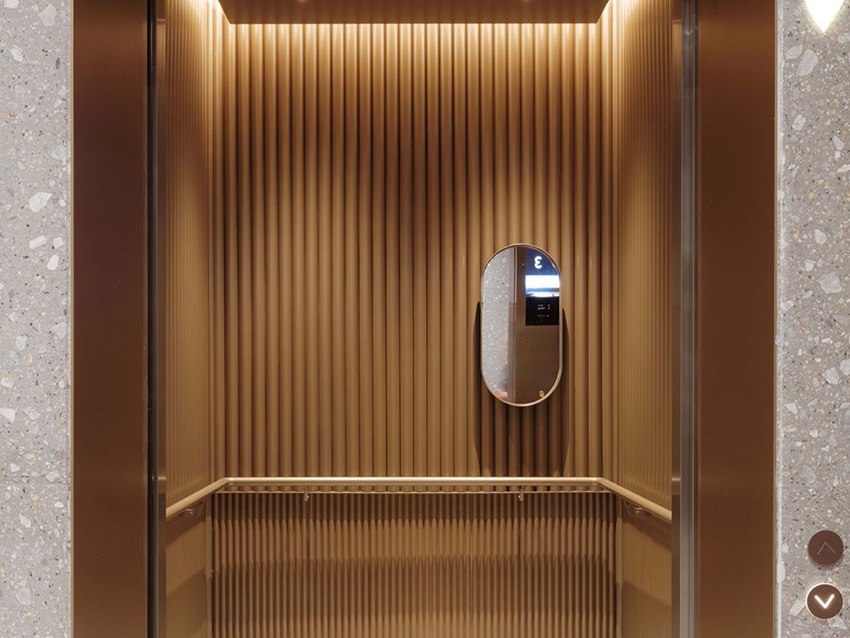
A mirror finish extends the perceived depth of a compact cabin and lifts the brightness without adding a light fitting. In a small car it can make the difference between cramped and comfortable. The cost is that mirror records every mark: a hand, a bag, a cleaning cloth, all of it stays visible until wiped.
A brushed finish gives up that depth but is far more tolerant. Marks scatter into the grain, and the surface holds up to daily handling with much less attention. Satin sits between the two.
The usual compromise
Most projects resolve this by splitting the surfaces rather than choosing one finish for everything. Mirror on the cabin walls where depth is wanted, satin or brushed on the door faces and push plates where hands actually land. The cabin still feels open, and the wear surface is the one that tolerates wear.
Close range exposes alignment
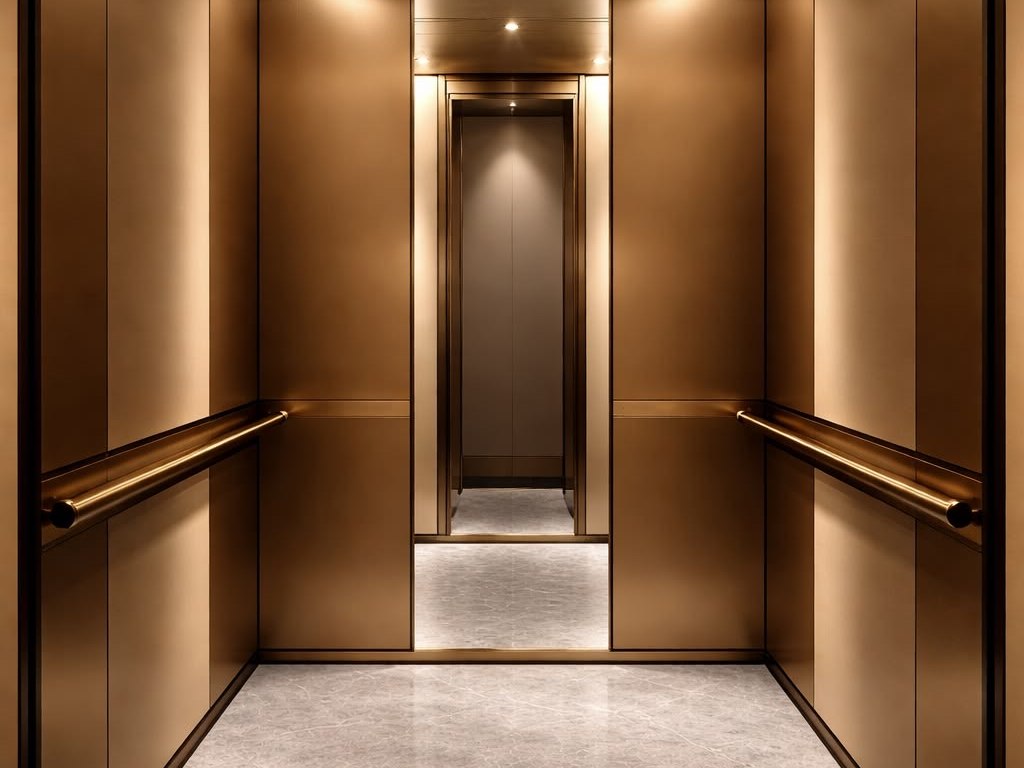
In a cabin the joint line, the edge detail and the corner return are read from directly in front. A 1 mm step that would be invisible across a lobby is obvious at knee height in a lift. Door panels and surrounds are therefore produced as one set, with the alignment resolved as a single detail rather than as separate components that happen to meet.
Fingerprints are a design problem, not a cleaning problem
Handling marks are the most common complaint about stainless cabins, and no finish eliminates them entirely. Anti-fingerprint treatments reduce how readily marks appear and how easily they clean off, but they are not a claim that the surface stays clean. Where a cabin is heavily used, the choice of finish does more for the appearance over time than any coating.
One sequence, one material language
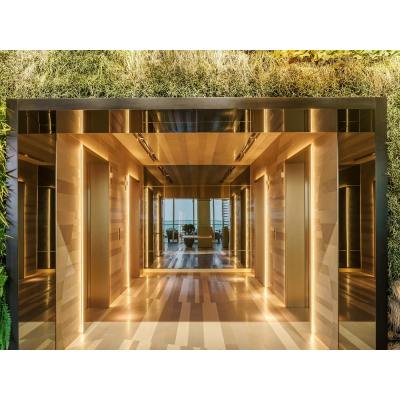
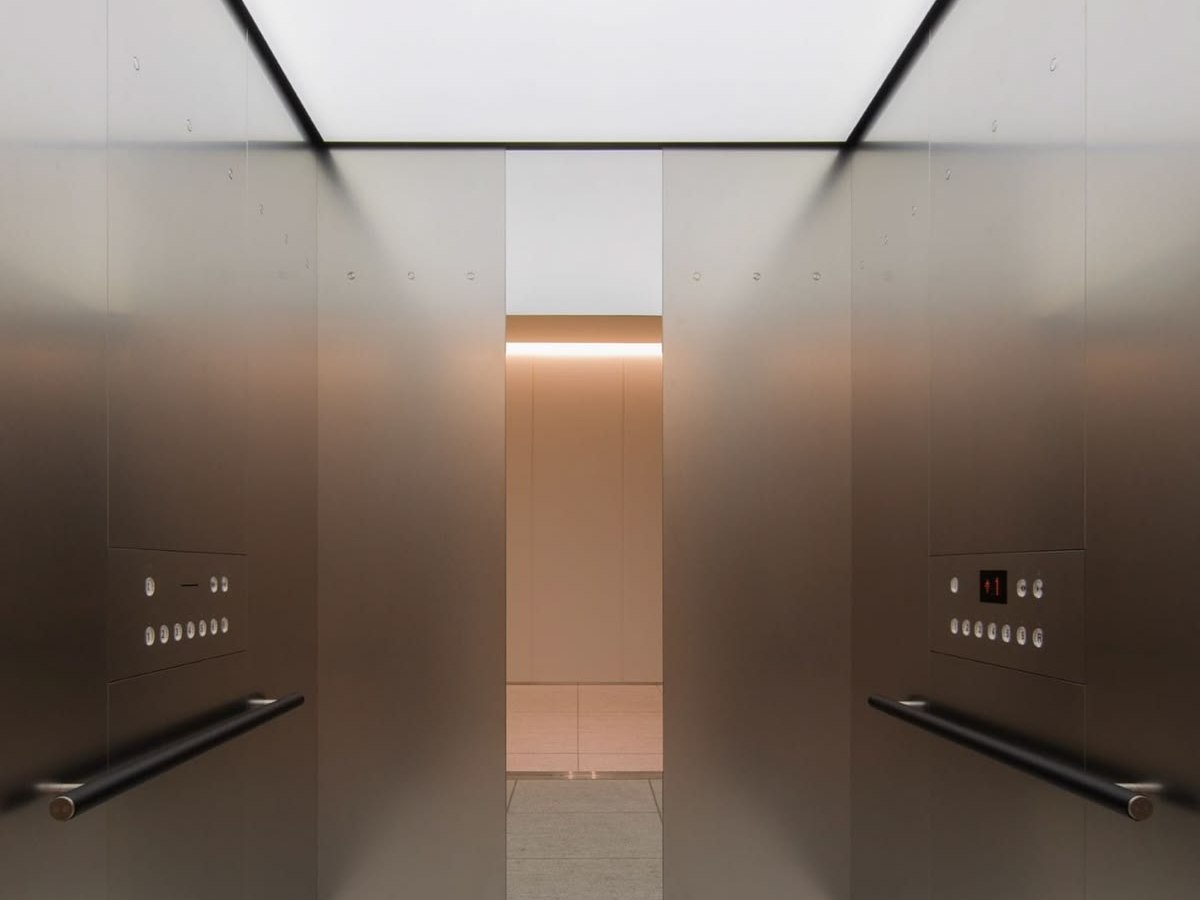
The lobby, the portal, the doors and the cabin form a single sequence, and a tone shift between them is noticed even by people who could not name it. Panels for one environment are produced as a batch, and PVD surfaces are held to an average colour difference below DE 1.0 so the cabin does not drift against the lobby.
The system is described on the elevator systems page. Send a cabin layout for finish coordination.