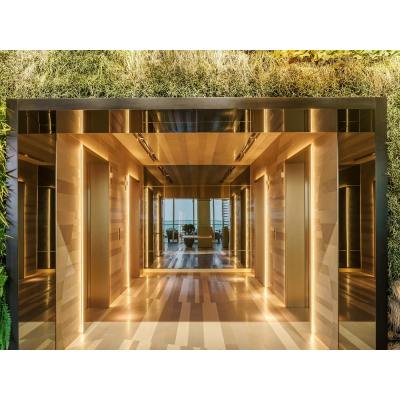
How Stainless Steel Roofing Panels Are Formed: Standing Seam, Folded and Curved
A stainless steel roof is sold as a surface but delivered as a set of formed components. The difference between a roof that reads as one continuous plane and one that looks assembled from parts is decided long before installation: in how the panel is formed, where the seams land and which direction the metal was worked.
What forming actually changes
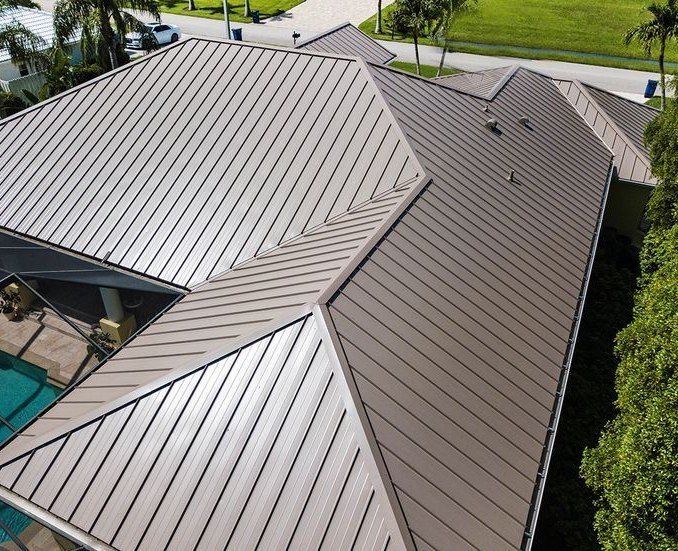
Forming is not a finishing step applied to a flat sheet. Bending, rolling and curving change the geometry of the panel, and with it the way light travels across the surface. A brushed stainless panel has a directional grain; when the panel is folded, each plane catches light at a different angle and the grain reads differently on each face. That is why fold lines are visible from a distance even on a uniform finish.
It follows that forming direction has to be decided with the surface, not after it. Rolling a panel along the grain and rolling it across the grain produce two different surfaces from the same coil.
Standing seam and folded geometry
A standing seam roof uses a raised joint between adjacent panels. The seam does three jobs at once: it covers the fixing, it stiffens the panel, and it draws a line across the roof that gives the surface a scale. On a large roof this line is the main thing a viewer reads, so the seam spacing is an architectural decision as much as a technical one.
Folded geometry goes further. Where a roof is intended to be part of the building identity, the fold is the form: the panels are bent along defined lines and the folds become edges, ridges and changes of plane. Expressed joints make that construction legible instead of pretending the roof is a single moulded shell.
Curved panels and the reflection check
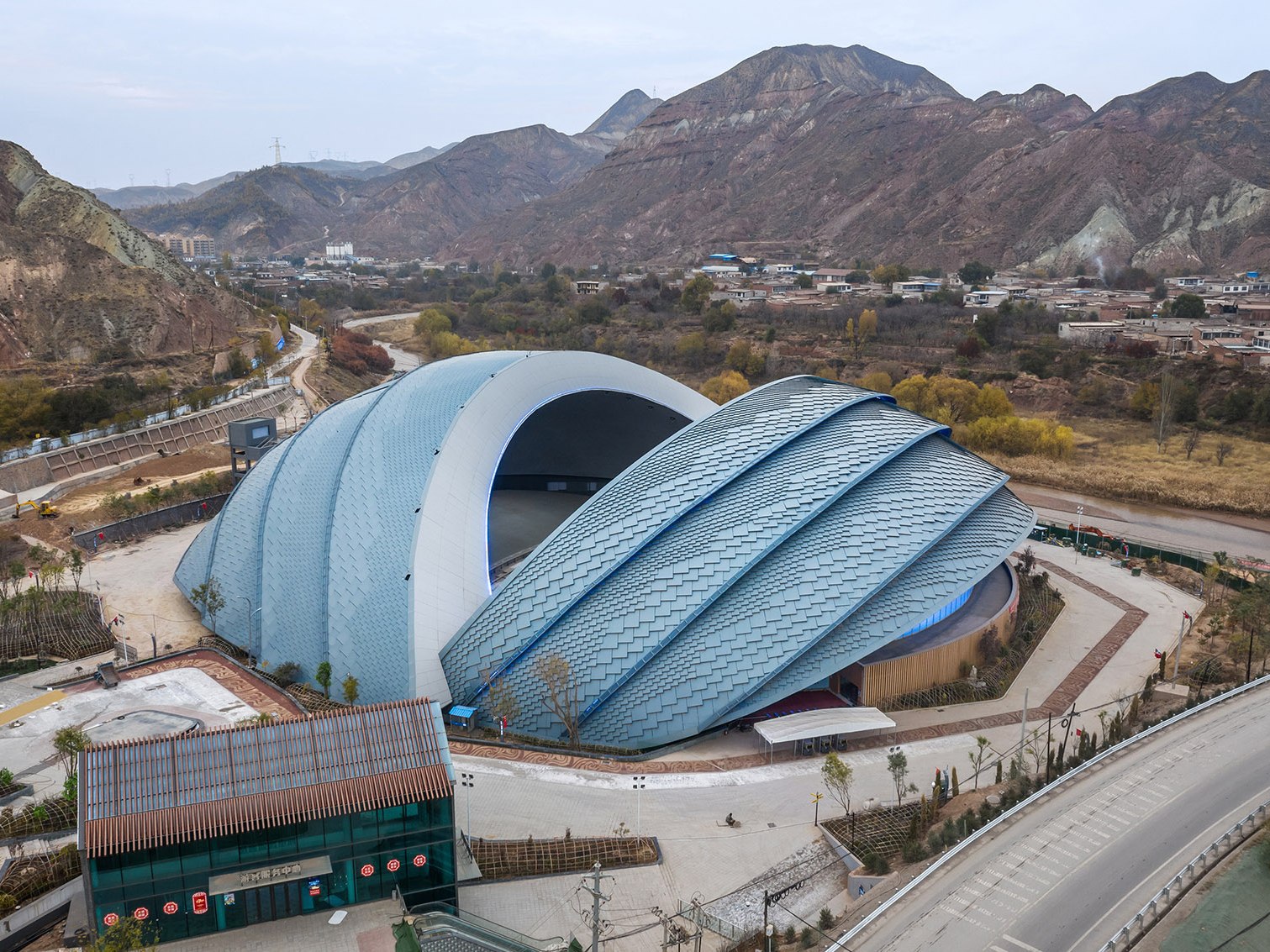
Curved panels are the hardest to get right, because a curve has nowhere to hide. On a reflective finish any inconsistency in radius shows up as a bent reflection, and the eye finds it immediately. Brushed finishes are more forgiving; mirror finishes least.
The practical consequence is that the finish and the forming tolerance are chosen together. A panel that is acceptable under a brushed finish may be rejected under a mirror one, even though both were rolled on the same machine.
Layout is fixed before production
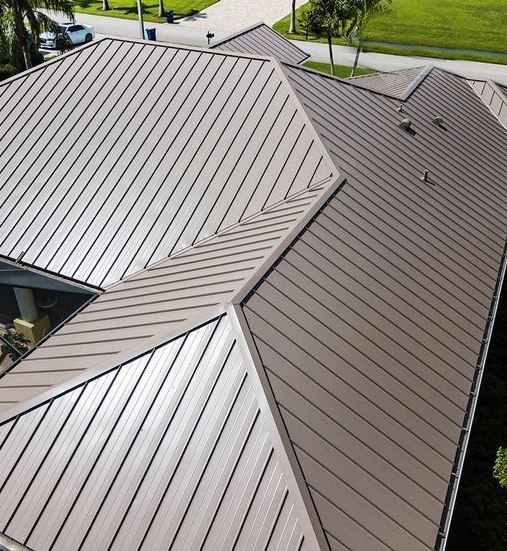
Panel size, joint layout, repetition and grain direction are all set from the project drawings. A fold that lands mid-panel cannot be corrected later without remaking the component, and a seam that drifts at a ridge is visible from the ground on every approach. Anything that can be checked on paper is checked before the coil is cut.
The same sequence covers cutting, edge detail, welding and assembly preparation, so the component arrives on site with its fixing positions and edge conditions already resolved.
What to send for a review
Roof geometry drawings, the intended surface direction, and the exposure of the site are enough to start. Grade selection follows the location: 316L is recommended for coastal sites under MetalMagus project specification standards, while other grades are selected against project requirements. An A4 sample of the finished surface is available within 3 days so the material can be judged under real light before the specification is fixed.
More on the system itself is on the stainless steel roofing systems page, or send drawings directly for a material and fabrication review.