Etching, PVD and Embossing: Three Ways to Decorate a Stainless Surface
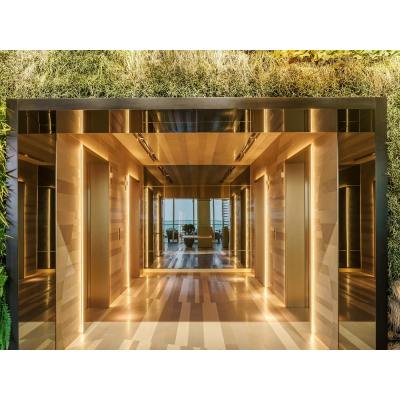
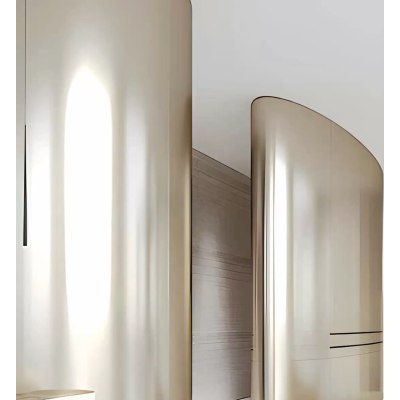
A patterned stainless surface can be made three quite different ways, and they are often spoken about as if they were interchangeable. They are not: one removes material, one adds a thin coating, and one reforms the sheet. Each produces a different relationship between pattern and light, and each fails differently.
Etching: the pattern is in the metal
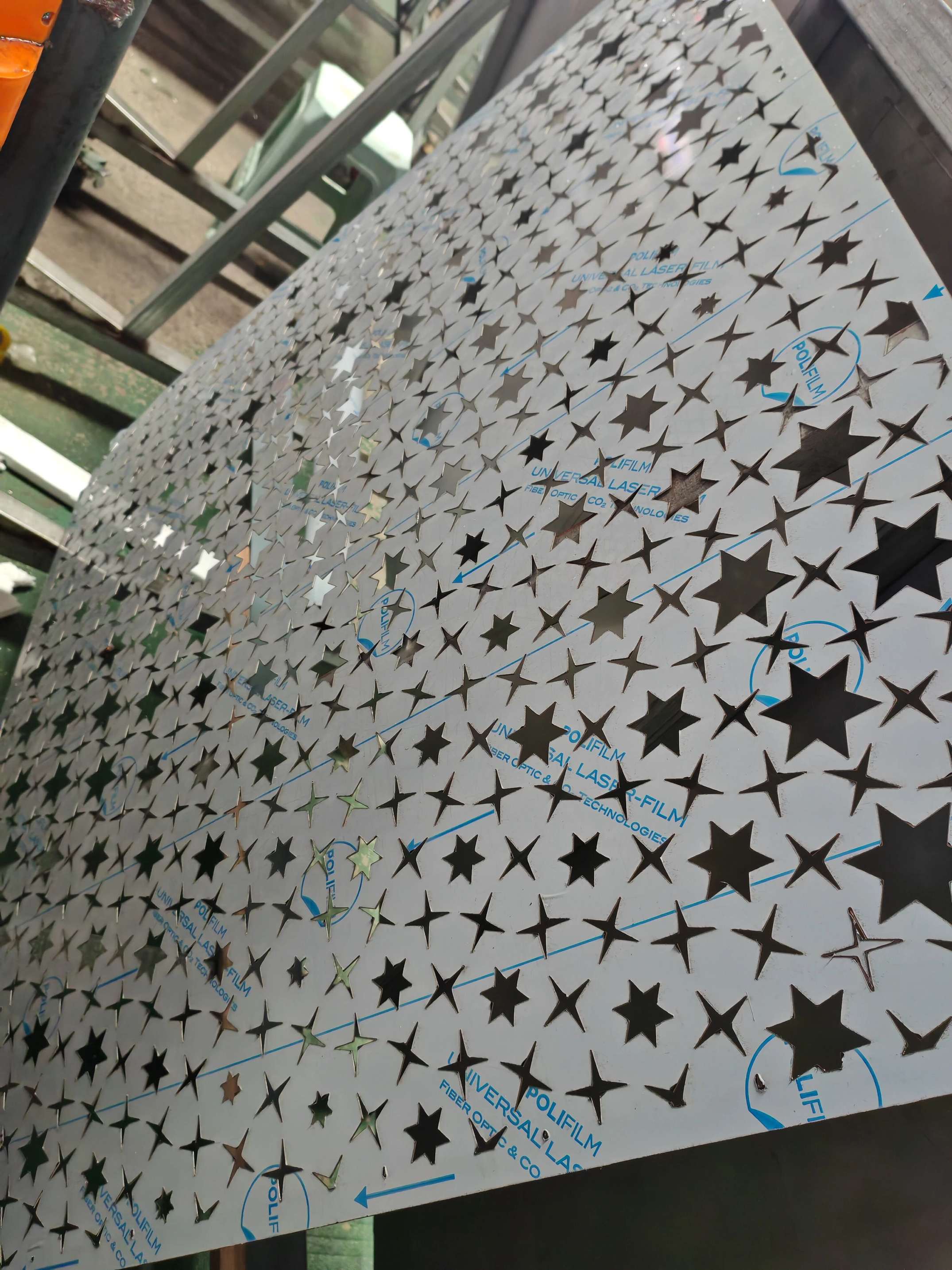
Etching removes material from the surface to a controlled depth. Because the relief is part of the sheet, the pattern survives handling, cleaning and abrasion that would wear away a printed graphic. Under direct light the etched areas read darker than the polished face, and the contrast changes with the viewing angle.
The constraint is depth. Deeper etching takes longer and costs more, and it changes how the panel behaves at bends. An etched pattern that runs across a fold line has to be planned against it.
PVD: colour without changing geometry
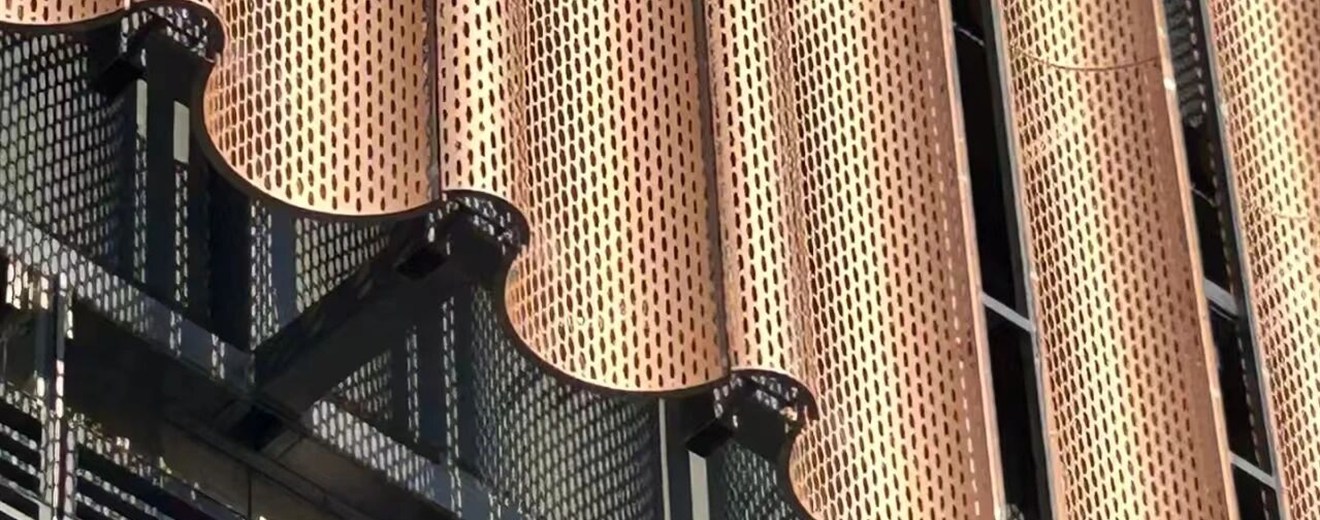
Physical vapour deposition adds a very thin coloured layer without altering the shape of the sheet. On a flat panel it produces a uniform tone. On a textured or perforated surface the coating follows the relief, so highlights sit on the crests and the tone deepens in the valleys, which is why colour reads far more strongly on a 3D surface than on a flat one.
Colour consistency is the practical issue. PVD batches are held to an average colour difference below DE 1.0, and panels for one elevation are produced as a single batch, because a tone shift between batches is obvious when two panels are compared side by side.
Embossing: the sheet itself is reformed
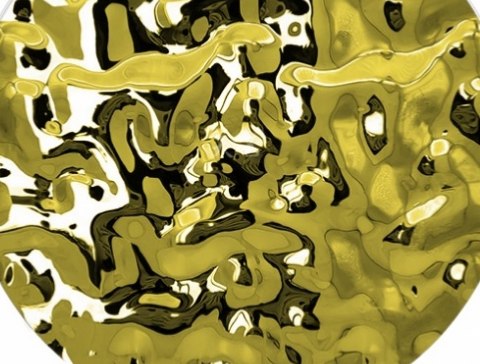
Embossing presses a three-dimensional pattern into the sheet. Unlike etching, which is a surface effect, embossing changes the panel geometry: the relief is large enough to catch light across its whole form. Water ripple surfaces are the clearest example, where the movement of the reflection comes from the depth of the relief rather than from any applied pattern.
Choosing between them
The choice usually follows from what the surface has to do. Where the pattern must hold up to touch and cleaning, etching is the durable answer. Where the requirement is colour, especially a metallic tone that shifts with angle, PVD is the tool. Where the surface needs physical depth and changing highlights, embossing does what the other two cannot.
They also combine: etched patterns are often finished with PVD colour, and embossed surfaces are frequently coloured for interior use. The governing question is whether colour is intended for exterior exposure, which depends on the project environment, substrate and technical requirements rather than on the finish name.
Perforated and patterned work is set out on the perforated stainless steel panels page, and a sample request is the fastest way to judge a pattern under real light.